
What is the hypnagogic state and why is it so powerful for the mind?
|
Getting your Trinity Audio player ready...
|
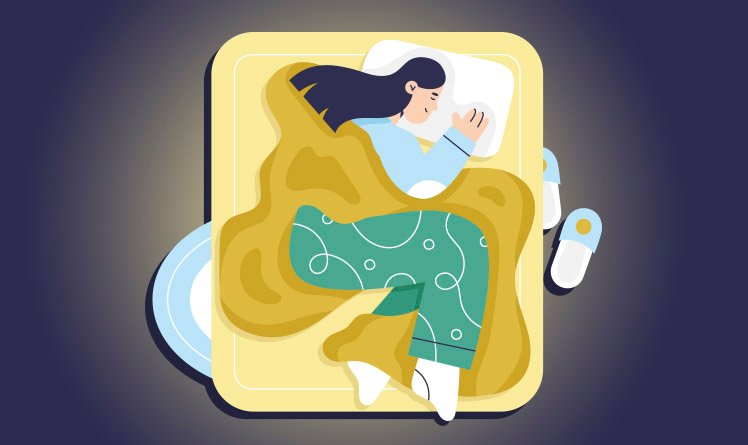
There is a curious, and extremely revealing, moment that happens almost every day, but goes unnoticed by most people. It occurs when we are between waking up and falling asleep, when the mind begins to let go of control and consciousness becomes… different. This moment is called hypnagogic state.
Perhaps you've already experienced this without knowing the name. Those flashes of images before falling asleep. Unexpected ideas. Strange sensations in the body. Loose phrases that appear out of nowhere. Or that feeling of "I almost fell asleep, but I was still conscious.".
This state is neither mystical nor random. On the contrary, it has a clear neurological basis and has been studied for decades. Moreover, it is one of the most fertile mental states for creativity, learning, insights, and reprogramming internal patterns.
And that's exactly what we're going to explore here, in depth, with clarity, and without exaggeration.
What is the hypnagogic state?
The hypnagogic state is a natural transitional state of consciousness that occurs between wakefulness and sleep. It arises when the body begins to relax deeply, but the mind has not yet completely "switched off.".
“"The hypnagogic state is the intermediate mental state between being awake and asleep, characterized by deep relaxation, reduced rational control, and the spontaneous emergence of images, sensations, and thoughts."”
In this state, the brain begins to operate differently. Logical thinking loses strength, while images, free associations, and unconscious content gain prominence.
Between sleep and wakefulness: a liminal state of consciousness
From a psychological point of view, the hypnagogic state is a liminal state, that is, a "border territory." In this sense, we are no longer fully awake, but we have not yet entered deep sleep.
It is precisely at this boundary that the mind becomes more open, less defensive, and less controlling. And that changes everything.
What happens in the brain during the hypnagogic state?
Brain waves and reduced cognitive control
When we are fully awake, beta brain waves predominate, which are linked to external focus, analysis, and control. As we enter the hypnagogic state, the brain begins to transition to alpha and theta waves.
Above all, these waves are associated with relaxation, imagination, creativity and access to internal content.
“"In the hypnagogic state, the brain reduces the activity of beta waves and begins to operate in alpha and theta waves, favoring mental imagery, creativity, and access to the unconscious."”
The role of the prefrontal cortex and the limbic system
In this process, the prefrontal cortex—a region located in the anterior part of the brain and responsible for judgment, planning, decision-making, and self-control—gradually reduces its interference. It's as if the mind's "rational manager" steps aside for a few minutes.
At the same time, the limbic system It becomes more active. And here's a crucial point.
The limbic system is a set of brain structures deeply connected to emotions, memories, and personal meanings. Thus, it includes areas such as the amygdala, hippocampus, hypothalamus, and parts of the thalamus. While the prefrontal cortex organizes logic, the limbic system organizes the emotional meaning of experiences.
During the hypnagogic state, this dynamic changes: rational control weakens and emotional processing takes over.
This explains why symbolic images emerge more easily. Because old memories can appear in fragmented form. And because emotions sometimes emerge without a logical narrative.
The hippocampus, for example, is directly involved in the consolidation of memories. On the other hand, the amygdala It participates in assigning emotional weight to experiences. When the hypnagogic state occurs, these structures operate with less supervision from the prefrontal cortex. Thus, the result is a more associative, less linear, and more imagistic mental flow.
“"In the hypnagogic state, the limbic system takes center stage while the prefrontal cortex reduces its activity, favoring memories, emotions, and spontaneous symbolic associations."”
In other words, the rational filter weakens, and the mind begins to operate in a more associative, emotional, and symbolic way. First and foremost, this is not mental disorganization. It is internal reorganization.
And in practice, this temporary equilibrium allows content that is normally repressed or ignored by the logical mind to find space to emerge. Therefore, it is precisely this openness that makes the hypnagogic state so fertile ground for insights, creativity, and... self-knowledge.
The hypnagogic state is neither sleep, nor meditation, nor trance.
The differences in relation to deep sleep
In deep sleep, consciousness dissolves. In the hypnagogic state, consciousness is still present, even if subtly. Therefore, you perceive images, internal sounds, and sensations—albeit in a fragmented way.
The differences in relation to meditation mindfulness
In meditation mindfulness, In the hypnagogic state, there is conscious presence with focus and sustained attention. In the hypnagogic state, attention is diffuse, loose, and undirected.
Therefore, it is not concentration. It is passive observation.
The differences in relation to hypnosis
THE hypnosis It involves guided induction and direction. The hypnagogic state, on the other hand, is spontaneous. In this sense, it happens without external commands—as long as the body and mind allow it.
Why is the hypnagogic state so powerful for the mind?
When conscious control diminishes, content that is normally repressed or filtered begins to emerge. This includes memories, emotions, symbolic images, and insights.
“"The hypnagogic state facilitates access to the unconscious because it reduces rational control and automatic mental filters."”
Thus, it is in this state that the mind connects ideas that, in full wakefulness, would never be associated. That is why so many creative solutions arise "out of nowhere" before falling asleep.
Furthermore, this state also favors the consolidation of memories and implicit learning. The mind is more receptive, less defensive, and more malleable.
The hypnagogic state and the science of creativity.
Creativity doesn't stem from excessive control. It arises when the mind relaxes enough to allow for unlikely combinations. The hypnagogic state creates precisely this scenario.
In this context, studies show that states of deep relaxation increase communication between brain networks that don't normally "talk" to each other as much. This explains sudden insights and original ideas.
Hypnagogic state, mindfulness and conscious presence
One of the points in common between mindfulness The hypnagogic state is observation without judgment. The difference is that, here, this observation happens spontaneously.
This state expands the famous "space between stimulus and response." And it is within this space that mental transformation becomes possible.
The hypnagogic state in Neuro-Linguistic Programming (NLP)
In NLP, we know that the mind operates by internal representations. In the hypnagogic state, these representations emerge uncensored, revealing deep patterns.
Thus, with less conscious resistance, new emotional associations can form. Consequently, this makes this state extremely fertile for internal change.
What typically arises in this state (and why it matters)
Nothing happens by chance. What appears in this state usually reflects active emotional themes, unresolved desires, or recurring patterns.
Therefore, observing—without over-interpreting—what emerges is, in itself, a process of profound self-knowledge.
When the hypnagogic state is lost (and why)
Excessive stimuli, screens, and hyper-control.
Cell phones until bedtime, information overload, constant anxiety. All of this prevents the mind from entering this natural state.
The mind that never slows down.
When the body relaxes, but the mind insists on controlling, the hypnagogic state does not occur.
The hypnagogic state and the circadian rhythm
Furthermore, the hypnagogic state is directly linked to our circadian cycle — the internal biological clock that regulates sleep, wakefulness, energy, and hormone release over approximately 24 hours. So, when we respect this natural rhythm, especially at night, the brain enters the sleep-wake transition more organically, favoring the hypnagogic experience.
On the other hand, when we disrupt sleep with excessive artificial light, screens, and irregular schedules, this transition becomes abrupt or superficial, making it difficult to access this highly fertile mental state.
Furthermore, this state cannot be "forced." The more control you have, the less it happens. And it's not astral travel, nor a spiritual portal. It's brain function—simple and powerful.
Practical exercise: how to safely induce the hypnagogic state
Before going to sleep, lie down comfortably. Close your eyes. Focus your attention on your breathing, without trying to control it. Just observe the air going in and out.
When images, thoughts, or sensations arise, don't try to interpret them. Just observe, like watching clouds drift across the sky. If your mind "switches off," that's okay. If you remain conscious, observe.
Do this for a few minutes, without any expectations. The goal is not to provoke anything, but to allow it.
How to integrate the hypnagogic state into daily life.
Before bed, avoid screens, excessive stimulation, and information overload. Give your body space to relax.
Furthermore, moments of conscious pause during the day, with eyes closed and diffused attention, can also favor hypnagogic microstates.
Conclusion: why this state changes the relationship with the mind
The hypnagogic state reminds us of something essential: The mind doesn't need to be in control all the time to function well.. On the contrary. It is when we let go of control that the greatest insights, learnings, and transformations emerge.
Understanding this state means learning to trust more in the natural workings of the mind, and less in the constant attempt to dominate it.
Frequently asked questions about the hypnagogic state.
1. Is the hypnagogic state dangerous?
No. It is a natural and safe state, experienced daily by all people.
2. Does everyone enter this state?
Yes. The difference is that few people consciously realize it.
3. Can I use this state for creativity?
Yes. It is one of the most fertile states for creative insights.
4. Does it help with mental reprogramming?
Yes, because it reduces conscious resistance and increases internal receptivity.
5. Is it the same as hypnosis?
No. It is spontaneous, not induced, and without external direction.
Image: Freepik

Marcel Castilho is an expert in neuromarketing, neuroscience, mindfulness and positive psychology. In addition to being an advertiser, he also has a Master's degree in NLP – Neurolinguistic Programming. As the owner and founder of the communications agency VeroCom and also of the digital agency Vero Contents, he has been studying human behavior for over 30 years.