
Mindfulness and NLP: A transformative combination

|
Getting your Trinity Audio player ready...
|
The quest for a fuller, more meaningful life often leads us to explore practices that promote mental and emotional balance. Two powerful approaches that have gained prominence are Mindfulness and Neuro-Linguistic Programming (NLP).
When combined, these practices become a transformative synergy, offering a journey of self-discovery and personal growth. In this article, we will explore how combining these two practices can be beneficial for personal and professional development.
Introduction to practices mindfulness and NLP
Mindfulness, at its core, is the art of being fully present in the moment, without judgment, cultivating a mindful awareness of the present. On the other hand, Neurolinguistic Programming (NLP) is an approach that seeks to understand human behavior and focuses on the language of the mind to achieve goals and shape the behavior.
The integration of Mindfulness and NLP allows us to experience a holistic approach that harmonizes mindfulness with mental programming, creating a path to personal transformation.
“Mindfulness and NLP are distinct approaches to personal development. While mindfulness develops conscious attention to the present moment, Neuro-Linguistic Programming (NLP) works with patterns of language, perception, and behavior to promote changes in the way we think and act.”
The transformative principles of mindfulness
Mindfulness is based on fundamental principles that transcend the mere practice of meditation. In this sense, full awareness improves the quality of our thoughts, emotions and actions, leading to a more balanced and centered life.
Some of these principles include:
- Mindfulness: paying intentional, non-judgmental attention to the present moment.
- Acceptance: accepting the thoughts and feelings that arise, without judgment or resistance.
- Understanding: the ability to understand the nature of thoughts and feelings without identifying with them.
- Patience: accepting that things take time and that change does not happen overnight.
Cultivating mindfulness involves training our minds to focus on the present and accept what is. This can help us reduce stress, improve concentration and mental clarity, and strengthen our connection to the present, opening up space for inner transformation and increased self-awareness.
Understanding Neuro-Linguistic Programming (NLP)
NLP offers a unique insight into how we perceive the world and communicate internally and externally. It focuses on thought patterns and language to create positive changes in the mind.
NLP teaches us to program our minds to achieve specific goals, using techniques that positively influence our perception and behavior. It is based on the idea that we can learn from people who have achieved success in a certain area and apply these same patterns to our own lives. NLP is used in a variety of contexts, such as coaching, therapy, sales, leadership, and communication.
Developed in the 1970s by Richard Bandler and John Grinder, its approach focuses on three main areas:
- Mind maps: our internal models of the world.
- Disposition: our patterns of communication and behavior.
- Goals: what we want to achieve in life.
In this way, it helps us understand how our mental maps, disposition and goals influence our behavior. Thus, it allows us to make positive changes in our lives, learning to communicate more effectively, overcome challenges and achieve our goals.
Synergy between mindfulness and NLP
The combination of Mindfulness and NLP brings a true synergy, where mindfulness enhances the effectiveness of NLP techniques. By being fully present, we increase our ability to absorb and apply NLP principles. Mindfulness positively impacts our thought processes, making them clearer, more focused and aligned with our goals and values.
Thus, the combination of Mindfulness and NLP can be beneficial for personal and professional development in a number of ways.
“"The combination of mindfulness and NLP proposes integrating awareness of thoughts and emotions with techniques for reflection and behavioral change. In this way, mindfulness helps to recognize automatic patterns, while NLP offers strategies to explore new responses to challenges."”
Practical techniques for integration mindfulness and NLP
To begin, try meditation mindfulness before applying specific NLP techniques. Combine the mental clarity gained from mindfulness with NLP exercises to set goals and overcome challenges:
- Creative visualization: Imagine yourself achieving your goals and visualize the process of achieving them. Do this during your meditation practice to enhance your visualizations.
- Anchoring: associate a positive emotional state with a specific gesture or word. Use mindfulness when you are reaching the desired emotional state. This will once again enhance the results of applying NLP.
- Mindful Breathing: Practice mindful breathing to calm the mind and reduce stress. stressIn this way, breathing will help to calibrate and apply NLP practices more efficiently, providing a more solid foundation for transformation.
“To integrate mindfulness and NLP into daily life, start with a few minutes of conscious breathing, observe your thoughts without judging them, and then use visualization or goal-setting exercises to plan concrete actions aligned with your objectives.”
Applications in daily life
The combination of Mindfulness and NLP can be applied in everyday situations to improve work performance, relationships and overall well-being.
At work, we can use mindfulness to improve our concentration and performance, and NLP to set goals and develop new skills. In addition, mindfulness can improve decision-making, while NLP techniques enhance communication skills.
In relationships, we can use mindfulness to increase our understanding of others and improve empathy, while NLP can improve our communication and conflict resolution.
In general well-being, we can use mindfulness to reduce stress and anxiety, and NLP to increase our self-acceptance and confidence by learning to deal with challenging situations.
In both our personal and professional lives, we can use visualization and anchoring to set goals and achieve them, increasing their effectiveness with the use of mindfulness.
“"The integration of mindfulness and NLP can contribute to self-awareness, communication, and the definition of personal goals. Mindfulness has evidence of benefits for stress and attention, while the specific results of NLP techniques still have scientific limitations."”
The path to personal transformation
Incorporate Mindfulness and NLP in everyday life is a gradual process. Start by integrating small daily practices, such as mindfulness meditation and positive NLP affirmations. Start with a simple technique and gradually increase the challenge as you become more comfortable.
Be patient and consistent, practicing regularly to get the best results. After all, personal transformation takes time and effort. So don’t give up if you don’t see immediate results.
Deepen your knowledge and explore additional resources such as books, courses, workshops and apps to increase your understanding and practice of Mindfulness and NLP.
Find an experienced mentor who can help you learn and grow.
Common challenges and creating routines mindfulness and NLP
During the integration of Mindfulness and NLP, it is common to face challenges such as mental distraction or resistance to change. So approach these challenges with compassion, adjusting your practices as needed.
Set realistic goals and celebrate small victories, gradually building a consistent practice.
Furthermore, incorporating daily routines is essential. Therefore, set aside specific times for mindfulness practices, followed by practical NLP exercises.
Stay consistent, as it is through repetition that these practices become a natural and integral part of your life.
“Creating a mindfulness and NLP routine requires consistency, realistic goals, and a willingness to experiment. Starting with brief practices, observing your own results, and gradually increasing the frequency of exercises can facilitate the building of habits of self-awareness and personal development.”
In short…
Adopting the transformative combination of Mindfulness and NLP, allows us to begin a journey of self-discovery, personal growth and achieving a fuller and more meaningful life.
By integrating these practices in a balanced way, you empower yourself to consciously shape your reality and achieve lasting positive results. Experiment, explore, and allow yourself to embark on this journey of personal transformation.
FAQ – Frequently asked questions about mindfulness and NLP
What is it mindfulness And what is the difference with NLP?
Mindfulness Mindfulness is a practice of attention that develops the ability to observe thoughts, emotions, and sensations without judgment. Neuro-Linguistic Programming (NLP), on the other hand, brings together techniques aimed at understanding and modifying patterns of language, perception, and behavior. While... mindfulness Emphasizing awareness of the present moment, NLP seeks to explore different ways of interpreting experiences and responding to situations.
It is possible to practice. mindfulness And NLP at the same time?
Yes. One way to combine the two approaches is to start with a mindful breathing practice to develop focus and tranquility. Then, visualization exercises, reflection on beliefs, or goal setting associated with NLP can be used. This integration is a practical proposal for personal development, although its specific benefits are not yet well established scientifically.
As mindfulness Can NLP help deal with negative thoughts?
THE mindfulness It helps to recognize negative thoughts as passing mental events, without necessarily accepting them as truths. Some techniques used in NLP, on the other hand, propose exploring alternative interpretations and reframing how certain experiences are perceived. The combination can function as an exercise in self-knowledge, but it does not replace psychological treatment when necessary.
Which techniques mindfulness Can NLP be used in everyday life?
Among the practices of mindfulness These include conscious breathing, thought observation, and mindfulness meditation. In NLP, visualization, anchoring, and language pattern exploration exercises are common. These activities can be incorporated into daily routines during moments of reflection, personal planning, and preparation for challenging situations, respecting individual limits and preferences.
How long does it take to notice the benefits of mindfulness And what about NLP?
There is no universal timeframe. The effects depend on the frequency of practice, personal goals, and the characteristics of each individual. Some people experience greater tranquility after brief exercises of... mindfulness, While more consistent changes in attention and relationship with thoughts may require weeks of practice, in the case of NLP there is insufficient scientific evidence to establish a reliable timeframe for results.
Recommended reading:
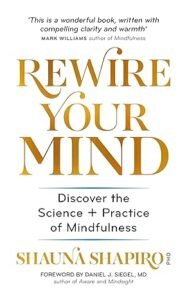
Rewire Your Mind: Discover the science and practice of mindfulness (English Edition)

Image: Freepik modified
Article originally published on 12/22/2023 and updated on the date above.

Marcel Castilho is a specialist in mindset and human behavior. In addition to being an advertising professional, he also holds a Master's degree in NLP (Neuro-Linguistic Programming) and postgraduate degrees in neuromarketing, neuroscience, mindfulness, and positive psychology. He is a digital marketing expert and has been studying human behavior for over 30 years.