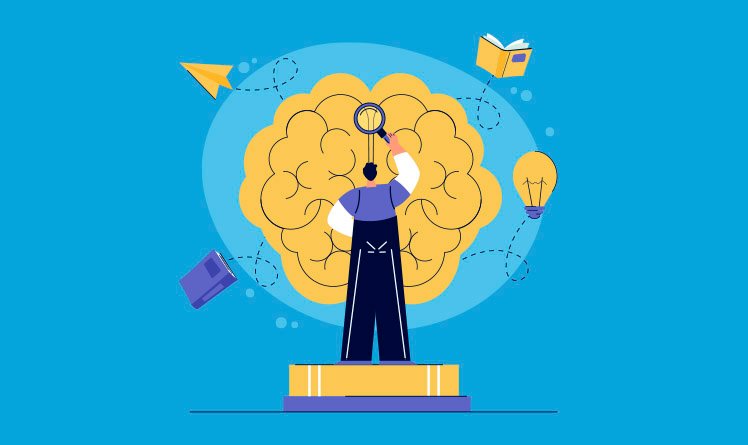
Human memory: how the brain learns, stores, and retrieves information.
|
Getting your Trinity Audio player ready...
|
First of all, when you hear the word "memory," what comes to mind? A computer? A cell phone full of files? Or memories from your childhood?
Although the term is used in various contexts, here we are talking about something much deeper: Human memory is the brain's ability to learn, store, and retrieve information throughout life..
And believe me, understanding how this works can completely change the way you learn, make decisions, and even how you interpret your own story.
What is human memory?
Simply put, memory is the system that allows you to store experiences and access that information when needed.
However, going further, it is not a "static file". On the contrary.
Memory is dynamic, constantly reconstructed, and profoundly influenced by emotions, attention, and interpretation.
In other words: you don't remember exactly what happened, you remember how your brain registered it.
And here begins something important…
Memory is not just storage. It is interpretation of reality.
“"Human memory is the process by which the brain registers, organizes, and retrieves information, enabling learning, adaptation, and identity formation."”
How does the brain form memories?
Now, let's understand the process.
It all starts with the call. codification.
Whenever you pay attention to something—a conversation, an image, a thought—your brain begins to transform that experience into neural signals.
These signals are transmitted between neurons through synapses.
And the more attention you dedicate to it, the stronger that connection becomes.
“"Memory begins to form when the brain encodes information through attention and neural activity."”
In other words, without attention... there is no consistent memory.
And that explains why you forget simple things: after all, you never really paid attention to them.
How is memory stored in the brain?
After encoding comes the consolidation.
At this stage, the brain transforms temporary information into more lasting memories.
Here a fundamental structure comes into play: the hippocampus.
The hippocampus acts as an "organizer," helping to transfer information for long-term storage.
“"The hippocampus is essential for transforming short-term memories into long-term memories."”
Furthermore, sleep plays a critical role in this process. Without adequate rest, consolidation is impaired.
How do we retrieve information?
Knowing something isn't enough. You need to access that information.
And that's where it comes in. evocation of memory. This process depends on partnerships.
For example:
- A scent can bring back a memory.
- A song can trigger an emotion.
- A word can unlock an idea.
Memory functions like a network, not like an isolated file.
Furthermore, emotions directly influence this access.
Emotional memories tend to be stronger and easier to retrieve.
Types of human memory
Although memory may seem like a single entity, it is actually composed of different systems.
Episodic memory
Related to personal experiences.
Example: a trip, a memorable moment.
Semantic memory
General knowledge.
Example: knowing the meaning of a word.
Procedural memory
Automatic skills.
Example: riding a bicycle.
Emotional memory
Connected to emotions.
Example: fear associated with a situation.
“"Human memory is divided into different types, such as episodic, semantic, procedural, and emotional, each with specific functions."”
Which areas of the brain are involved in memory?
Although it's common to imagine memory as a "file" stored in a single place in the brain, the reality is quite different. In practice, memory is the result of integrated work between various brain regions, forming a true network of neural connections.
“"Memory is not stored in a single location in the brain, but is processed by different areas that work in an integrated way."”
Each type of memory activates specific, albeit interconnected, circuits. Understanding this helps us to see why we remember some things better than others.
Hippocampus: the organizer of memories
As we have already mentioned, the hippocampus plays a central role in the formation of new memories, especially episodic memories, those related to lived experiences.
It functions as a "hub," organizing information before it is stored in other areas of the brain. Without it, it would be extremely difficult to transform experiences into lasting memories.
Prefrontal cortex: focus and working memory
THE prefrontal cortex It is directly linked to working memory, that is, the ability to keep information active for a short period.
You know when you memorize a number before writing it down? Or try to stay focused on an idea while solving a problem? That's the part of your brain that's at work.
Furthermore, she also participates in decision-making and the organization of thought.
Amygdala: the emotional filter of memory
THE amygdala It is related to emotions and, consequently, to emotional memories.
Situations involving fear, intense joy, or emotional impact tend to be registered more strongly precisely because of this structure.
That's why you easily remember significant moments, but forget neutral details of everyday life.
Cerebellum: the autopilot of skills
The cerebellum is involved in procedural memory, which is responsible for automatic skills.
Activities such as driving, cycling, or typing on a keyboard are clear examples of this.
Once learned, these actions require less and less conscious effort.
Cerebral cortex: distributed storage
Long-term memories are not stored in a single location. They are distributed throughout the cerebral cortex, according to the type of information.
- visual memories → visual areas
- auditory memories → auditory areas
- sensations → sensory areas
In other words, remembering something is actually about reactivating different parts of the brain at the same time.
What does this mean in practice?
This behavior demonstrates something essential:
Remembering is not about accessing a file, but about reconstructing an experience.
And this reconstruction involves:
- emotions
- interpretations
- context
- current mental state
Therefore, the same memory can change over time, and that's precisely where concepts like reframing, beliefs, and mental patterns come in.
How NLP can influence the way we store and access memories.
If memory is not a fixed file, but rather an active reconstruction by the brain, then a question arises:
Is it possible to change the way we remember things?
The answer is yes, and this is exactly where Neuro-Linguistic Programming (NLP) techniques come in.
“"NLP acts directly on how memories are represented in the brain, allowing for the reinterpretation of experiences and the alteration of their emotional impact."”
In practice, NLP works with something called internal representations, In other words, the way you mentally "encode" an experience, the mind maps.
These representations involve:
- images
- sounds
- sensations
And they are known as submodalities.
Submodalities: the invisible code of memories
Every memory you have possesses specific characteristics.
For example:
- Is it light or dark?
- Near or far?
- With loud or soft sound?
- Intense or weak emotionally?
These details may seem small, but they have a direct impact on how you feel about that memory.
In other words: it's not just what happened, but how your brain represents what happened.
That way, If you change the way memory is represented, you change the way it is felt.
Reinterpretation: altering the impact of memories.
Based on this logic, NLP allows one to reduce the emotional weight of negative experiences and strengthen positive ones.
For example:
- A bad memory can be "pushed aside," obscured, or diminished.
- A positive memory can be expanded, approximated, and intensified.
Above all, this process does not erase the past, but completely changes the way it influences the present.
“"To reframe a memory means to alter its emotional charge without changing the fact that it occurred."”
Dissociation: observing memory from the outside
Another powerful technique is... dissociation.
Instead of reliving an experience "from the inside," you begin to observe it as a spectator.
This creates an emotional distance that allows:
- more clarity
- less reactivity
- more control over interpretation
It is precisely this space that activates the metacognition and it allows you to break automatic patterns.
The impact of the change on your daily life.
Now comes the most important part.
If your memories influence you:
- your emotions
- your decisions
- their behaviors
So changing how you access these memories can transform your way of life. You stop reacting based on the past and start responding more consciously in the present.
And this is not theory. It's applied practice of how the brain works.
Connecting everything
Ultimately, what neuroscience shows and NLP applies is simple:
You don't control what you've experienced, but you can influence how it's recorded and accessed in your mind.
And it is precisely this capacity that opens up space for the mindset change, Breaking patterns and building new results.
Memory, emotions, and beliefs: the invisible connection
After everything we've seen, the main takeaway is that memory not only records the past, it shapes your behavior in the present.
This happens because your experiences become associated with emotions in the limbic system.
Over time, these memories form patterns.
And these patterns became beliefs.
“"Beliefs are built from memories that are emotionally interpreted throughout life."”
In other words, if you have experienced repeated negative events, your brain may create limiting interpretations.
This explains why many people know how to act in many situations in life, but fail to act.
However, the problem is not a lack of ability. It's emotional memory conditioning behavior.
How to improve memory in practice.
If memory is trainable—and it is—then you can strengthen it.
But there's no point in looking for shortcuts. Improving memory is linked to consistent habits.
Firstly, mindfulness (mindfulnessIt is one of the most powerful tools. When you are present, you encode the information better.
Furthermore, the Repetition strengthens Neural connections. And, even more importantly, association facilitates access.
The more connections you create, the easier it is to remember.
What might be sabotaging your memory without you realizing it?
Many people live in a constant state of distraction.
Excessive stimuli, anxiety and internal dialogue Negative factors directly harm retention.
Furthermore, living in the past or the future prevents encoding in the present.
Without presence, there is no strong memory.
And this connects directly to one of the mindset blocks: lack of awareness.
Practical exercise to strengthen your memory.
Now, let's put this into practice.
Stop for a moment.
Take a deep breath.
Think of something you want to remember: it could be a concept, a task, or an idea.
Now do three things:
- Visualize this information as a clear image.
- Associate a positive emotion with it.
- Repeat mentally with full attention.
This simple exercise activates different areas of the brain and strengthens memory.
If done consistently, it significantly improves your retention capacity.
Conclusion
In short, memory is not just a mental resource; it is the foundation of your identity, your decisions, and your behaviors.
Understanding how it works allows us to stop being held hostage by the past, giving us more control over the present.
And most importantly:
You begin to realize that changing your life inevitably involves changing the way you record and interpret your experiences.
FAQ – Frequently Asked Questions about Memory
1. What is human memory?
Human memory is the brain's ability to learn, store, and retrieve information over time.
2. How to improve memory quickly?
The best approach is to increase attention span, repeat information, and create emotional associations with the content.
3. Why do we forget things?
Forgetting occurs due to lack of attention, insufficient repetition, or interference from other information.
4. What is the relationship between memory and emotions?
Emotions strengthen the formation and retrieval of memories, making them more memorable.
5. Can memory be trained?
Yes. Memory is highly trainable and can be improved with practice, attention, and specific techniques.
Image: Freepik

Marcel Castilho is a specialist in mindset and human behavior. In addition to being an advertising professional, he also holds a Master's degree in NLP (Neuro-Linguistic Programming) and postgraduate degrees in neuromarketing, neuroscience, mindfulness, and positive psychology. As the owner and founder of the communication agency VeroCom and the digital agency Vero Contents, he has been studying human behavior for over 30 years.