
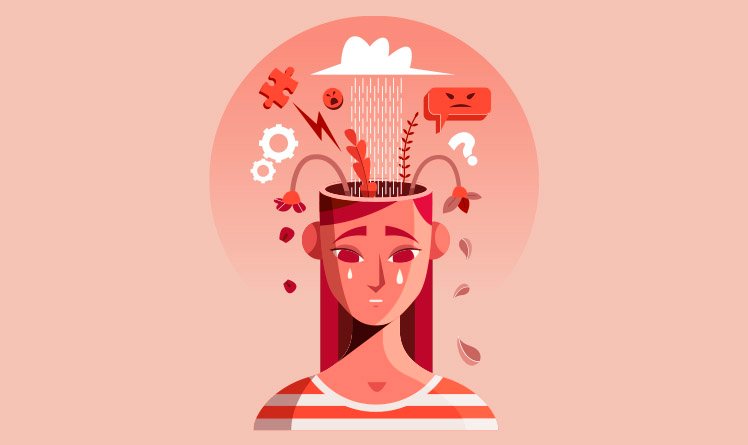
Mental overload: silent signs that your mind is working at its limit.
|
Getting your Trinity Audio player ready...
|
Do you feel tired even after resting? Do you have difficulty concentrating, constantly forgetting simple things, and feel like your mind never slows down?
Perhaps you are living in a state of mental overload.
And this is one of the great silent problems of modern life.
After all, we live connected all the time. There are notifications, demands, information overload, anxiety, professional pressure, financial worries, social media, comparisons, and constant stimuli. Our brain was created to survive in complex environments, but not to remain alert 24 hours a day.
The result is a tired, racing, and emotionally exhausted mind.
The worst part is that many people continue to function normally while they are overwhelmed. They work, answer messages, keep appointments, and follow their routines. However, internally, they feel as if they are carrying an invisible weight.
Mental overload rarely arrives screaming. Most of the time, it appears silently.
And that's precisely why so many people ignore the signs. In this article, we'll discuss mental overload and its silent warning signs.
What is mental overload?
Mental overload is a state of cognitive and emotional excess caused by the constant accumulation of stimuli, worries, decisions, responsibilities, and thoughts.
In other words, it happens when the brain receives more information and demands than it can process in a healthy way.
This creates a continuous feeling of mental pressure, emotional fatigue, and difficulty in psychological recovery.
“"Mental overload is the state in which the brain remains constantly challenged, without sufficient time for emotional and cognitive recovery."”
Unlike physical fatigue, an overloaded mind doesn't improve with just a few hours of rest. After all, the problem isn't just in the body, but mainly in the excess of mental activity.
How mental overload affects the brain.
Our brain consumes a huge amount of energy to maintain focus, attention, memory, decision-making and emotional control.
Above all, when we live under excessive stimuli, the nervous system remains in a constant state of alert. This increases the release of cortisol and it activates brain regions related to survival, such as the amygdala.
At the same time, the prefrontal cortex — responsible for mental clarity, planning, and emotional self-regulation — begins to lose efficiency.
As a result, we overthink, feel more anxious, and have difficulty... concentration, We react emotionally more easily and make worse decisions…
It's like trying to use a computer with dozens of tabs open at the same time. The system keeps running, but slowly starts to freeze.
Difference between mental overload, stress and burnout
Many people confuse these concepts. However, although they are related, they are not the same.
Stress is a natural response of the body to challenges or pressures.
On the other hand, mental overload arises when the brain remains constantly exposed to excessive demands without adequate recovery.
Already the burnout It is a deeper state of physical and emotional exhaustion, usually linked to chronic work and prolonged burnout.
“"Mental overload can be seen as an intermediate stage between frequent stress and more severe emotional burnout."”
In other words, ignoring mental overload can pave the way for bigger problems in the future.
The silent signs that your mind is on the edge.
Constant fatigue
You wake up tired, spend the day tired, and end the day with no energy.
Even when she sleeps, it seems her mind has never truly rested.
This happens because the brain continues to process worries, thoughts, and tensions even during periods of rest.
Difficulty concentrating
To read a page and forget what you just read.
Opening multiple tabs without completing anything.
Starting tasks and quickly losing focus.
These are classic signs of cognitive fatigue.
When there is mental overload, the brain loses efficiency in sustaining prolonged attention.
Irritability and impatience
Mentally overwhelmed people often overreact to minor problems.
A simple message can seem intrusive. An interruption can generate disproportionate irritation.
This happens because the brain is already operating close to its emotional limit.
Feeling like you're always late
Even when there is no real urgency, the mind transmits a constant feeling of pressure.
In this way, it's as if there's always something pending. Something missing. Or something accumulating.
This state creates silent anxiety and prevents true relaxation.
Insomnia and racing thoughts
The body tries to rest, but the mind keeps working.
That is, repetitive thoughts, anticipating problems, and over-planning are common in mentally overloaded people.
Therefore, the more tired the brain becomes, the harder it is to slow down.
Frequent forgetfulness
Mental overload reduces our ability to retain and organize information.
That's why simple things start to happen. These include appointments, names, tasks, objects, and recent conversations.
Emotional exhaustion
Perhaps this is one of the most important signs. The person doesn't just feel tired. They feel emotionally exhausted.
Everything seems to require too much energy. Even small tasks start to feel burdensome.
Why do we live in a state of mental overload?
The human brain did not evolve to cope with the absurd amount of stimuli in modern life.
After all, we receive more information in a single day than people centuries ago received in months.
Furthermore, we are pressured by constant productivity, we are connected all the time, we experience social comparisons on networks, and we accumulate multiple emotional roles.
Many still carry guilt for resting.
As a result, the brain never truly enters a state of recovery.
The role of anxiety and overstimulation.
Anxiety fuels mental overload. And mental overload fuels anxiety. It's a cycle.
The more racing your thoughts, the greater the cognitive strain. Similarly, the greater the cognitive strain, the harder it becomes to regulate emotions and thoughts.
Furthermore, the excess of digital stimuli keeps our brains in a state of continuous hyper-attention.
Constant notifications fragment focus and prevent deep periods of mental rest.
How the brain reacts to mental overload.
When the mind remains overwhelmed for too long, the brain begins to prioritize emotional survival.
We are constantly losing clarity, creativity, presence, mental flexibility, and decision-making ability.
At the same time, automatic patterns become stronger.
Therefore, overwhelmed people tend to procrastinate, Repeating bad habits, reacting impulsively, and seeking quick rewards.
Mental overload and self-sabotage
Many people believe they procrastinate because of laziness.
In reality, there is often an emotionally exhausted brain trying to conserve energy.
“"Mental overload reduces the capacity for emotional self-regulation and increases automatic behaviors of escape and procrastination."”
When the brain is at its limit, it avoids tasks that seem emotionally demanding.
Therefore, getting adequate rest is also a form of productivity.
The impact of mental overload on relationships.
An overloaded mind affects more than just productivity.
It affects relationships. Above all, mentally exhausted people become less patient, listen less, have less emotional presence, shut down emotionally, and react automatically.
In other words, they become irritated or distant.
However, the problem is not a lack of love, but accumulated emotional exhaustion.
How to relieve mental overload in everyday life
Stimulus reduction
Not every stimulus deserves your attention. Therefore, reducing excessive notifications, overconsumption of content, and practicing multitasking already makes a huge difference to the brain.
Ultimately, silence is mental health.
Mindfulness
THE mindfulness It helps to interrupt the constant state of mental acceleration.
Mindfulness brings the mind to the present moment and reduces excessive emotional anticipation.
In addition, it strengthens brain regions linked to emotional self-regulation.
Mental organization
Not everything needs to stay inside your head.
First and foremost, writing down tasks, priorities, and thoughts reduces cognitive load.
The brain functions best when it doesn't need to remember everything at once.
Emotional regulation
Learning to observe emotions without reacting automatically reduces mental strain.
Conscious breathing, mindfulness NLP techniques help the brain to get out of automatic mode.
Practice metacognition, the practice of not letting oneself be guided by one's automatic thoughts, impulses, and emotions.
Royal rest
Many people stop exercising their bodies, but continue to stimulate their minds.
For example, spending hours on your cell phone does not mean mental rest.
True rest involves reducing stimuli, slowing down, and emotional recovery.
Practical exercise to relieve mental overload.
Try this simple exercise in emotional regulation and mindfulness.
Sit comfortably.
Close your eyes.
Breathe deeply through your nose for 4 seconds.
Hold your breath for 2 seconds.
Release slowly through your mouth for 6 seconds.
Now observe your thoughts without fighting them.
First of all, don't try to control the mind.
And above all, just understand.
Whenever a thought arises, imagine it as a cloud crossing the sky.
Stay like this for 3 minutes.
This short exercise helps the brain reduce overstimulation and activates mechanisms of emotional self-regulation.
Some behaviors that silently fuel mental overload.
Often, we don't realize that certain habits make mental overload even worse.
Among them:
- Excessive multitasking;
- Excessive use of social media;
- lack of breaks;
- constant comparison;
- perfectionism;
- need for continuous productivity;
- absence of emotional boundaries;
- Excessive self-criticism.
The problem isn't just the volume of tasks.
Often, it's the amount of emotional tension associated with them.
When mental overload warrants professional attention.
Feeling tired occasionally is normal.
However, when mental overload starts affecting sleep, productivity, relationships, emotions, physical health, and quality of life... it might be time to seek professional help.
Psychologists, therapists, and specialized professionals can help reorganize emotional patterns and reduce accumulated mental strain.
Asking for help is not a sign of weakness. On the contrary, it's a sign of emotional intelligence.
Conclusion
Mental overload is one of the great silent challenges of modern life.
However, it doesn't just manifest as tiredness. It also appears as irritability, anxiety, procrastination, difficulty focusing, insomnia, and a constant feeling of emotional exhaustion.
The problem is that many people have become accustomed to living on the edge.
However, living at a breakneck pace all the time doesn't mean living well.
Your brain needs breaks, presence, emotional recovery, and inner space to function in a healthy way.
But the brain has the capacity to neuroplasticity. In other words, new emotional and cognitive habits can be developed and alter our internal functioning.
Small daily changes can significantly reduce mental overload and restore clarity, balance, and well-being.
Because, in the end, a rested mind not only produces more.
She lives better.
FAQ – Frequently asked questions about mental overload
What is mental overload?
Mental overload is the excess of cognitive and emotional demands that exceed the brain's healthy processing capacity, causing mental and emotional fatigue.
What are the symptoms of mental overload?
The most common symptoms include constant fatigue, irritability, difficulty concentrating, insomnia, racing thoughts, procrastination, and emotional exhaustion.
Can mental overload cause anxiety?
Yes. Mental overload increases the brain's state of alertness and can intensify symptoms of anxiety and emotional stress.
How to relieve mental overload?
Reducing stimuli, getting adequate rest, practicing mindfulness, organizing thoughts, taking conscious breaks, and self-regulating emotions help alleviate mental overload.
What is the difference between mental overload and burnout?
Mental overload is a state of cognitive and emotional excess. Burnout, on the other hand, is a deeper condition of chronic physical and emotional exhaustion, usually related to work.
Image: Magnific

Marcel Castilho is a specialist in mindset and human behavior. In addition to being an advertising professional, he also holds a Master's degree in NLP (Neuro-Linguistic Programming) and postgraduate degrees in neuromarketing, neuroscience, mindfulness, and positive psychology. As the owner and founder of the communication agency VeroCom and the digital agency Vero Contents, he has been studying human behavior for over 30 years.