
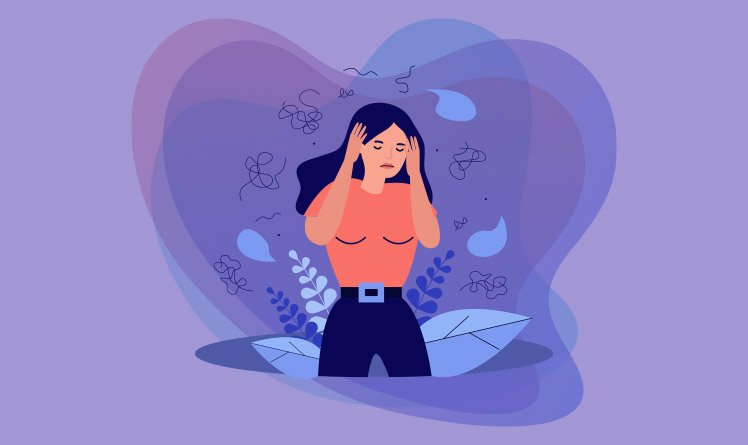
Mental exhaustion: why you feel emotionally drained all the time
|
Getting your Trinity Audio player ready...
|
Have you ever had the feeling of being tired even without having done any physical exertion?
As if his mind were heavy. Without energy. Without enthusiasm. Without the emotional strength even for simple tasks.
So perhaps you are experiencing mental exhaustion.
And the most dangerous thing is that many people continue to function normally while they are emotionally exhausted. They work, talk, answer messages, fulfill obligations… but inside they feel as if their energy has disappeared.
It's like driving a car with an almost empty tank for weeks. Eventually, the system starts to fail.
We live in a society that has normalized excess. Excess of demands, stimuli, productivity, comparison, worry, and emotional pressure. As a consequence, millions of people live in a permanent state of psychological exhaustion.
However, mental exhaustion rarely appears abruptly. On the contrary, it usually arrives silently. First comes emotional fatigue. Then irritability, difficulty focusing, loss of motivation, and a feeling of disconnection.
Until, at some point, the mind simply starts crying out for help. We need to talk about mental exhaustion.
What is mental exhaustion?
Mental exhaustion is a state of emotional and cognitive depletion caused by prolonged periods of stress, psychological pressure, and internal wear and tear.
It happens when the brain remains strained for too long without adequate emotional recovery.
“"Mental exhaustion is the profound depletion of emotional and cognitive energy caused by continuous excessive psychological pressure."”
Unlike regular tiredness, mental exhaustion doesn't improve simply with a good night's sleep. The issue is that it's not just physical; it's in the emotional system. In the mind. In the excess of accumulated tension.
How mental exhaustion affects the brain
Our brains weren't designed to remain in a constant state of alert. Therefore, when we live under constant pressure, the body releases cortisol and activates survival mechanisms linked to the limbic system.
The amygdala in the brain — responsible for detecting threats — becomes hyperactive.
Meanwhile, the prefrontal cortex, responsible for planning and emotional control, loses efficiency. As a result, you begin to experience difficulty focusing, fatigue, low emotional tolerance, a feeling of inadequacy, racing thoughts, and procrastination.
Furthermore, an emotionally drained mind begins to conserve energy. Therefore, even small tasks start to seem enormous.
The difference between mental exhaustion, stress, and burnout
Although related, these concepts are not the same. Firstly, stress is a temporary response of the body to challenges.
On the other hand, mental exhaustion occurs when this state is prolonged and begins to continuously consume emotional energy. burnout This represents a more severe and chronic stage of burnout, usually associated with the work environment.
“"Mental exhaustion is a profound state of emotional depletion that arises when the brain remains under pressure for an extended period of time."”
In other words:
- Stress is tension;
- Mental exhaustion is draining;
- burnout It's a collapse.
The emotional and physical signs of mental exhaustion.
Constant emotional exhaustion
You feel emotionally exhausted all the time, even when resting and without strenuous physical activity. It's as if your inner energy has vanished.
This is one of the most common signs of mental exhaustion.
Lack of motivation
Things that once generated enthusiasm begin to feel burdensome. As a result, the mind loses the energy to initiate tasks, maintain consistency, or find pleasure in simple activities.
This is often mistaken for laziness. But it's not.
Often, it's emotional exhaustion.
Emotional irritability
When the brain is drained, emotional tolerance decreases. As a result, small situations begin to generate disproportionate reactions. In this sense, messages become irritating, small noises bothersome, interruptions seem unbearable…
This happens because the nervous system is already overloaded.
Feeling of emptiness
Perhaps this is one of the most difficult symptoms to explain. The person doesn't just feel tired. They feel emotionally disconnected, as if they were functioning on autopilot.
Lacking presence and enthusiasm. Lacking emotional vitality.
Difficulty concentrating
An emotionally exhausted mind loses cognitive efficiency.
That's why forgetfulness increases, focus decreases, thoughts become scattered, and simple tasks seem difficult.
It's like trying to use a cell phone with the battery at 2%.
Insomnia and repetitive thoughts
The body is tired, but the mind remains active.
Thus, repetitive thoughts, anticipating problems, and excessive worry make it difficult to get deep rest.
Many mentally exhausted people feel they never truly switch off.
Emotional distancing
Mental exhaustion also affects relationships.
The person begins to avoid conversations, becomes emotionally withdrawn, loses patience, reduces social interactions, and feels a constant need for isolation.
This doesn't always mean a lack of affection. Sometimes it simply means a lack of available emotional energy.
Why do so many people live emotionally drained?
People are constantly living drained lives because we live in a lifestyle that demands constant productivity.
The brain receives stimuli all the time:
- notifications;
- information;
- charges;
- comparisons;
- concerns;
- Too many decisions.
In addition, many people carry:
- Excessive self-criticism;
- perfectionism;
- fear of failure;
- need for approval;
- difficulty in slowing down.
The result is a continuous state of internal wear and tear.
The relationship between anxiety, self-criticism, and emotional burnout.
THE anxiety It speeds up the mind. However, self-criticism prevents emotional rest. And together, they slowly drain psychological energy. Many people live trying to solve everything mentally all the time, thinking, planning, and worrying too much.
And they almost never allow the mind to truly slow down.
“"Mental exhaustion often stems from a combination of constant anxiety, excessive emotional responsibility, and a lack of psychological recovery."”
The brain in survival mode.
When the mind remains under continuous pressure, the brain enters survival mode. In this state, creativity decreases, pleasure is reduced, mental flexibility drops, and emotional self-regulation worsens.
In this way, the brain begins to prioritize only energy conservation and emotional protection.
Therefore, emotionally drained people often procrastinate, avoid tasks, and feel a constant urge to "disappear for a while.".
It's not weakness. It's exhaustion.
Mental exhaustion and self-sabotage
Furthermore, an emotionally exhausted brain seeks immediate relief.
Therefore, the following often arise:
- procrastination;
- Excessive use of social media;
- isolation;
- Emotional escape;
- compulsions;
- abandonment of goals.
“"Mental exhaustion reduces the capacity for emotional self-regulation and increases automatic escape behaviors."”
Many people blame themselves for this, but an emotionally drained brain doesn't function at peak clarity. It's just trying to survive.
How to recover your emotional energy
Real pauses
Stopping the body doesn't mean resting the mind. On the contrary. Many people spend hours on their cell phones believing they are relaxing, while they continue to overstimulate their brains.
True rest involves reducing stimuli. After all, silence is also emotional recovery.
Emotional regulation
Learning to observe emotions without reacting automatically reduces internal stress. Mindfulness, breathing exercises And self-regulation techniques help the brain to get out of survival mode.
Mindfulness and presence
Much of the emotional strain comes from excessive thinking about the past and the future. Mindfulness helps to break this cycle, creating inner space.
And this space reduces emotional pressure.
Sleep and brain recovery
THE sleep It is one of the brain's main mechanisms for emotional restoration. Therefore, without proper recovery, the nervous system remains in a state of constant fatigue.
Therefore, quality sleep is mental health.
Emotional boundaries
People who are emotionally drained often carry too many responsibilities. In this sense, one of the main points is learning to say "no." After all, that's also a form of psychological self-care.
Because not every demand deserves unlimited access to your mental energy.
Practical exercise to reduce mental exhaustion.
Try this simple emotional release exercise.
First, sit comfortably. Then, close your eyes.
Breathe slowly for a few seconds.
Now ask yourself, mentally:
“What is draining my emotional energy today?”
Observe the response without judgment.
Don't try to solve the problem immediately. Just identify it.
Then ask:
“"What really depends on me at this moment?"”
Often, our minds carry burdens that don't belong to them.
Now, continue breathing slowly for 3 minutes. And just relax.
This small exercise helps the brain reduce excess emotional tension and regain inner understanding.
Behaviors that silently drain your emotional energy.
Some habits significantly worsen mental exhaustion:
- Excessive multitasking;
- constant comparison;
- hyperconnectivity;
- perfectionism;
- lack of breaks;
- Excessive self-criticism;
- constant need for productivity;
- Difficulty in disconnecting emotionally.
The problem isn't just working too much.
Often, it's about overthinking all the time.
When to seek professional help
Every human being experiences emotional exhaustion at some point.
However, when mental exhaustion begins to affect productivity, personal relationships, sleep, emotions and motivation, and especially quality of life... it may be time to seek professional help.
Psychologists and specialized professionals can help reorganize emotional patterns and reduce accumulated stress.
After all, asking for help is not a sign of weakness.
It's emotional maturity.
Conclusion
Mental exhaustion is one of the major emotional symptoms of modern life.
It doesn't just manifest as tiredness.
It manifests as emptiness, irritation, disconnection, procrastination, lack of motivation, and a constant feeling of emotional drain.
The problem is that many people have learned to function while emotionally exhausted. But surviving isn't the same as living well, is it?
Above all, your brain needs recovery, presence, breaks, and emotional balance to function healthily.
The good news is that the mind is endowed with neuroplasticity. In other words, new emotional habits can be built.
With small, consistent changes, it's possible to regain emotional energy, mental clarity, and quality of life.
Because an emotionally rested mind not only produces more.
She experiences life in a lighter way.
FAQ – Frequently Asked Questions about Mental Exhaustion
What is mental exhaustion?
Mental exhaustion is a profound state of emotional and cognitive depletion caused by prolonged excessive psychological pressure and a lack of emotional recovery.
What are the symptoms of mental exhaustion?
Symptoms include constant fatigue, irritability, lack of motivation, difficulty concentrating, racing thoughts, emotional apathy, and insomnia.
Is mental exhaustion the same thing as burnout?
No. Mental exhaustion can precede burnout, but burnout is a more serious and chronic condition of emotional exhaustion, usually related to work.
How can I relieve mental exhaustion?
Real breaks, mindfulness, adequate sleep, stimulus reduction, emotional boundaries, and emotional self-regulation help reduce mental exhaustion.
Can anxiety cause mental exhaustion?
Yes. Anxiety keeps the brain in a constant state of alert, increasing emotional strain and cognitive fatigue over time.
Image: Magnific

Marcel Castilho is a specialist in mindset and human behavior. In addition to being an advertising professional, he also holds a Master's degree in NLP (Neuro-Linguistic Programming) and postgraduate degrees in neuromarketing, neuroscience, mindfulness, and positive psychology. As the owner and founder of the communication agency VeroCom and the digital agency Vero Contents, he has been studying human behavior for over 30 years.